Strength Training Benefits for Men and Women: A Complete Guide (2026)
Strength training is one of the most effective forms of exercise for improving overall health and fitness. While many people associate strength training with bodybuilding or lifting heavy weights, it offers benefits for people of all ages and fitness levels. Whether your goal is to build muscle, improve balance, increase energy, or support long-term health, strength training can be an important part of a well-rounded fitness routine.
Both men and women can benefit from regular strength training. It not only helps develop stronger muscles but also supports healthy bones, improves posture, enhances physical performance, and contributes to overall well-being. The best part is that strength training can be performed at home or in a gym using bodyweight exercises, resistance bands, dumbbells, or machines.
In this guide, you’ll learn about the many benefits of strength training, how to get started safely, and why it should be part of your weekly exercise routine.
Disclaimer: This article is for educational purposes only and should not be considered medical advice. Consult a qualified healthcare professional before starting any new exercise program, especially if you have an existing medical condition or injury.
What Is Strength Training?
Strength training, also known as resistance training, involves exercises that make your muscles work against resistance. The resistance may come from body weight, resistance bands, dumbbells, kettlebells, barbells, or weight machines.
Common strength training exercises include:
- Squats
- Push-ups
- Lunges
- Deadlifts
- Bench Press
- Shoulder Press
- Planks
- Rows
These exercises target different muscle groups and help improve overall body strength.
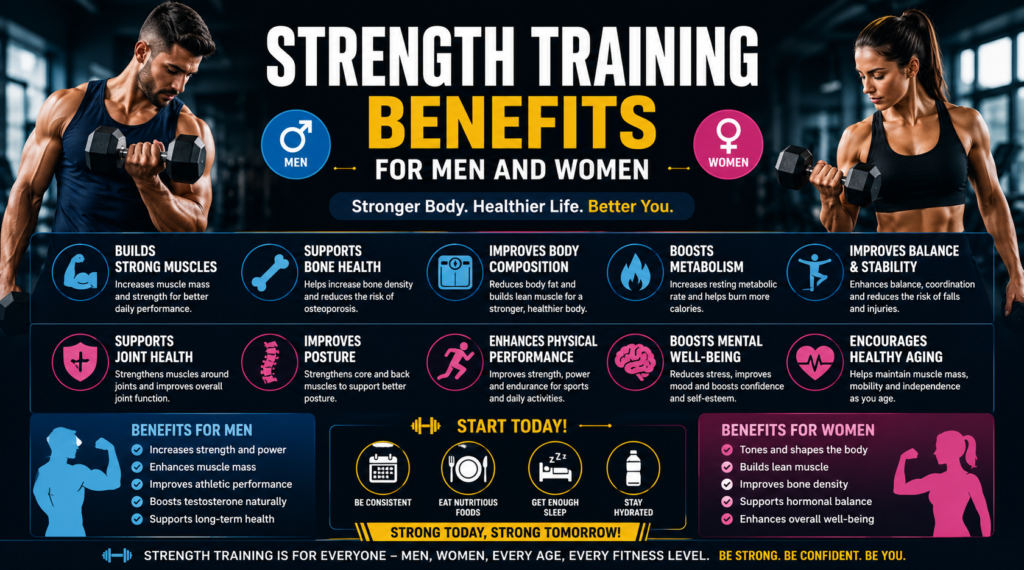
1. Builds Stronger Muscles
One of the primary benefits of strength training is improved muscle strength.
As muscles are challenged through resistance exercises, they gradually adapt and become stronger over time. Increased strength can make daily activities such as lifting groceries, climbing stairs, or carrying children feel easier.
2. Supports Healthy Bones
Regular resistance exercise helps place healthy stress on bones, encouraging them to stay strong as part of an active lifestyle.
Maintaining bone strength becomes increasingly important as people age.
3. Improves Body Composition
Strength training helps build lean muscle while supporting healthy body composition when combined with balanced nutrition and regular physical activity.
Muscle tissue also requires energy to maintain, making it an important part of overall fitness.
4. Increases Metabolism
Muscle tissue generally requires more energy than fat tissue.
Building and maintaining muscle through strength training may support your body’s natural energy use as part of a healthy lifestyle.
5. Improves Balance and Stability
Strong muscles help improve balance, coordination, and overall movement.
Better balance can reduce the risk of falls and make everyday activities easier.
6. Supports Joint Health
Strengthening the muscles around your joints can provide additional support during daily movement.
Using proper technique and appropriate resistance is important for safe exercise.
7. Improves Posture
Many people spend long hours sitting at desks or using electronic devices.
Strengthening your back, shoulders, and core muscles can help support better posture and reduce muscle weakness caused by prolonged sitting.
8. Boosts Physical Performance
Whether you enjoy running, cycling, swimming, or recreational sports, strength training can complement many physical activities.
Improved strength often supports better movement efficiency and overall athletic performance.
9. Supports Mental Well-Being
Regular exercise, including strength training, can contribute to improved mood and reduced stress.
Many people also experience increased confidence as they become stronger and achieve their fitness goals.
10. Encourages Healthy Aging
Maintaining muscle strength becomes increasingly important with age.
Regular resistance exercise can help older adults maintain independence, mobility, and overall quality of life.
Benefits for Men
Strength training offers many advantages for men, including:
- Increased muscle strength
- Improved physical performance
- Better posture
- Enhanced endurance
- Support for healthy body composition
- Greater confidence
Men can benefit from both bodyweight exercises and traditional resistance training.
Benefits for Women
Women can also gain significant benefits from strength training.
Some common benefits include:
- Improved muscle tone
- Better bone health
- Increased strength
- Improved balance
- Support for healthy aging
- Greater functional fitness
Contrary to a common myth, moderate strength training does not automatically result in excessive muscle size. Training results vary depending on genetics, nutrition, and individual exercise programs.
How Often Should You Strength Train?
For many healthy adults, general fitness guidelines commonly recommend strength training exercises for major muscle groups at least two days per week.
Allowing time for recovery between sessions helps muscles adapt and recover.
A simple weekly routine might include:
Monday: Upper body
Wednesday: Lower body
Friday: Full-body workout
Rest or perform light physical activity on other days.
Beginner Tips
If you’re new to strength training:
- Start with bodyweight exercises.
- Learn proper technique.
- Warm up before every workout.
- Increase resistance gradually.
- Focus on consistency rather than heavy weights.
- Stay hydrated.
- Eat balanced meals.
- Get enough sleep.
Building strength takes time, so be patient with your progress.
Common Mistakes to Avoid
Avoid these common mistakes:
- Skipping warm-ups
- Using poor exercise technique
- Lifting weights that are too heavy
- Ignoring rest days
- Forgetting proper nutrition
- Inconsistent workouts
- Comparing yourself with others
Learning proper form helps reduce injury risk and improves long-term progress.
Nutrition and Recovery
Strength training works best when combined with healthy lifestyle habits.
Focus on:
- Balanced meals
- Lean protein sources
- Fruits and vegetables
- Whole grains
- Healthy fats
- Adequate hydration
- Quality sleep
Recovery is just as important as training itself.
Final Thoughts
Strength training is one of the most valuable forms of exercise for both men and women. It supports stronger muscles, healthier bones, better posture, improved balance, and overall physical fitness while complementing an active lifestyle.
You don’t need expensive equipment or advanced fitness experience to begin. Simple bodyweight exercises, resistance bands, or light weights can provide an excellent starting point. By exercising consistently, using proper technique, eating a balanced diet, and allowing time for recovery, you can enjoy the long-term benefits of strength training.
Remember that fitness is a lifelong journey. Focus on gradual progress, stay consistent, and celebrate every improvement. Small, regular efforts can lead to lasting changes that support your health and well-being for years to come.
Continue Your Fitness Journey
Strength training is just one part of building a healthier and stronger body. To achieve the best results, it’s important to combine resistance training with regular physical activity, nutritious eating habits, and a balanced daily routine. Together, these healthy lifestyle choices can help improve your overall fitness, energy levels, and long-term well-being.
To continue your health and fitness journey, we recommend reading these related guides:
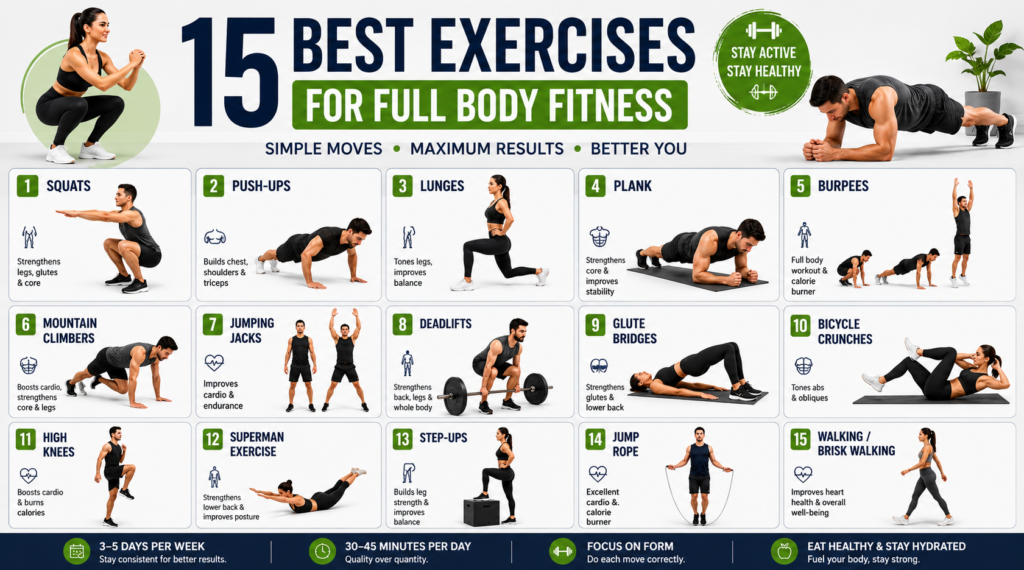
- 15 Best Exercises for Full Body Fitness – Explore beginner-friendly full-body exercises that improve strength, flexibility, endurance, and overall fitness.
- 10 Daily Habits for a Healthy Lifestyle – Discover simple daily habits that can help you maintain better physical health, mental well-being, and a healthier lifestyle.
These articles will help you build a complete fitness routine and develop healthy habits that support your wellness goals throughout the year.