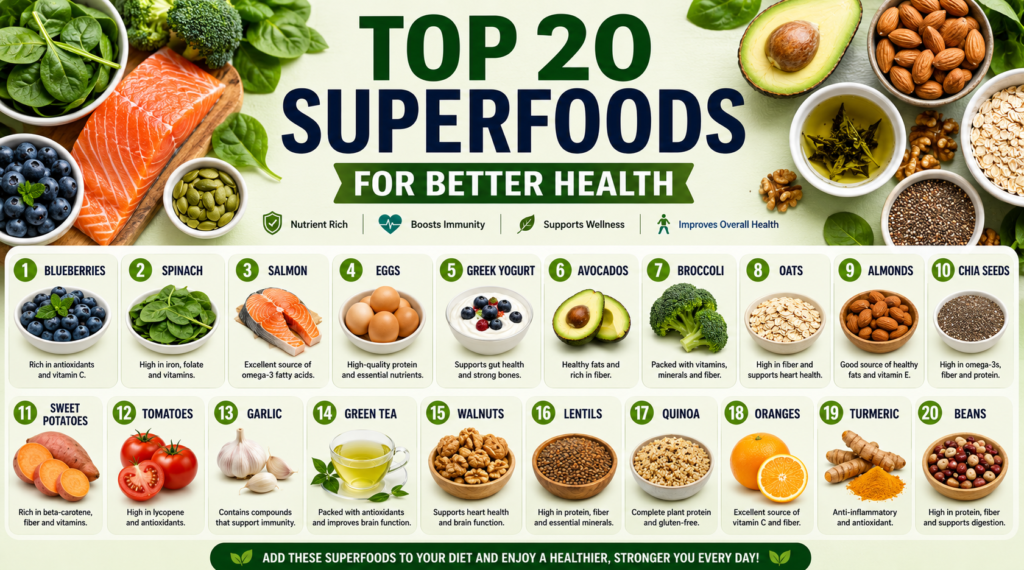
Top 20 Superfoods for Better Health: A Complete Nutrition Guide (2026)
Eating a healthy, balanced diet is one of the best ways to support your overall well-being. While no single food can prevent disease or provide every nutrient your body needs, some foods are especially rich in vitamins, minerals, antioxidants, fiber, and healthy fats. These nutrient-dense foods are commonly known as superfoods.
Superfoods can be a valuable part of a healthy eating pattern because they provide important nutrients that support normal body functions. Including a variety of these foods in your daily meals may help improve energy levels, support heart health, promote healthy digestion, and contribute to overall wellness.
In this guide, you’ll discover the top 20 superfoods for better health, their nutritional benefits, and simple ways to include them in your everyday diet.
Disclaimer: This article is for educational purposes only and should not be considered medical advice. Always consult a qualified healthcare professional or registered dietitian if you have medical conditions, food allergies, or specific dietary needs.
What Are Superfoods?
The term “superfood” is commonly used to describe foods that are rich in nutrients such as vitamins, minerals, antioxidants, healthy fats, and fiber. Although “superfood” is not a scientific classification, many of these foods can be part of a balanced diet that supports overall health.
Rather than relying on one food alone, aim to eat a wide variety of nutritious foods every day.
1. Blueberries
Blueberries are rich in antioxidants, vitamin C, vitamin K, and dietary fiber.
Benefits
- Supports overall health
- Rich in antioxidants
- Provides important vitamins
- Easy to add to breakfast or snacks
2. Spinach
Spinach is packed with iron, folate, calcium, vitamin A, and vitamin C.
Benefits
- Supports healthy nutrition
- High in vitamins
- Rich in minerals
- Easy to add to salads and smoothies
3. Salmon
Salmon is an excellent source of protein and omega-3 fatty acids.
Benefits
- Supports heart health as part of a balanced diet
- High-quality protein source
- Rich in healthy fats
4. Eggs
Eggs provide complete protein along with several important vitamins and minerals.
Benefits
- High-quality protein
- Keeps you feeling full
- Versatile for healthy meals
5. Greek Yogurt
Greek yogurt contains protein, calcium, and beneficial bacteria.
Benefits
- Supports digestive health
- Rich in calcium
- Excellent breakfast option
6. Avocados
Avocados contain healthy fats, potassium, and fiber.
Benefits
- Source of healthy fats
- Rich in fiber
- Easy addition to meals
7. Broccoli
Broccoli provides vitamin C, vitamin K, fiber, and antioxidants.
Benefits
- Nutritious vegetable
- Rich in vitamins
- Supports a balanced diet
8. Oats
Oats are a whole grain rich in fiber and important nutrients.
Benefits
- Provides lasting energy
- High in dietary fiber
- Great breakfast choice
9. Almonds
Almonds are rich in healthy fats, protein, vitamin E, and magnesium.
Benefits
- Nutritious snack
- Healthy fats
- Good source of protein
10. Chia Seeds
Chia seeds contain fiber, omega-3 fats, and minerals.
Benefits
- High in fiber
- Easy to add to smoothies
- Supports a balanced diet
11. Sweet Potatoes
Sweet potatoes provide complex carbohydrates, vitamin A, and fiber.
Benefits
- Nutritious carbohydrate source
- Rich in vitamins
- Great for healthy meals
12. Tomatoes
Tomatoes contain vitamin C, potassium, and lycopene.
Benefits
- Rich in antioxidants
- Easy to include in meals
- Low in calories
13. Garlic
Garlic is widely used in cooking and contains beneficial plant compounds.
Benefits
- Adds flavor naturally
- Rich in nutrients
- Part of many healthy diets
14. Green Tea
Green tea contains natural antioxidants and is a popular beverage worldwide.
Benefits
- Refreshing drink
- Rich in plant compounds
- Low in calories
15. Walnuts
Walnuts provide healthy fats, protein, and fiber.
Benefits
- Nutritious snack
- Healthy fat source
- Easy to include in meals
16. Lentils
Lentils are rich in plant protein, fiber, iron, and folate.
Benefits
- Budget-friendly protein
- High in fiber
- Supports balanced nutrition
17. Quinoa
Quinoa is a whole grain that contains protein, fiber, and minerals.
Benefits
- Complete plant protein
- Gluten-free option
- Versatile ingredient
18. Oranges
Oranges are an excellent source of vitamin C and fiber.
Benefits
- Refreshing fruit
- Rich in vitamin C
- Convenient healthy snack
19. Turmeric
Turmeric is a spice commonly used in many cuisines.
Benefits
- Adds natural flavor
- Rich in plant compounds
- Popular ingredient in healthy recipes
20. Beans
Beans provide plant protein, fiber, vitamins, and minerals.
Benefits
- Affordable protein source
- Supports balanced meals
- High in fiber
Tips for Adding Superfoods to Your Diet
You don’t need to completely change your eating habits to enjoy these nutritious foods.
Simple ideas include:
- Add berries to oatmeal or yogurt.
- Include leafy greens in salads.
- Snack on nuts instead of chips.
- Replace refined grains with oats or quinoa.
- Include beans or lentils in soups.
- Eat fish regularly if it fits your diet.
- Drink water alongside balanced meals.
Small changes can make healthy eating more enjoyable and sustainable.
Common Nutrition Mistakes
Avoid these common mistakes:
- Believing one food alone can improve health
- Skipping balanced meals
- Eating too many processed foods
- Ignoring portion sizes
- Drinking too many sugary beverages
- Not eating enough vegetables
Remember that overall eating patterns matter more than any single food.
Healthy Lifestyle Beyond Nutrition
Nutrition is only one part of a healthy lifestyle.
For overall wellness, also focus on:
- Regular physical activity
- Quality sleep
- Staying hydrated
- Managing stress
- Avoiding smoking
- Limiting alcohol
- Maintaining a healthy body weight
Combining healthy eating with these habits supports long-term well-being.
Final Thoughts
Superfoods can be a valuable addition to a balanced diet because they provide essential nutrients that support overall health. However, there is no single “perfect” food. The best approach is to eat a wide variety of fruits, vegetables, whole grains, lean proteins, healthy fats, and other nutrient-rich foods while maintaining an active lifestyle.
Making small, consistent improvements to your daily diet can contribute to better health over time. By including these 20 nutritious foods in your meals, you can build healthy eating habits that support your well-being throughout 2026 and beyond.
Continue Your Healthy Lifestyle Journey
Healthy eating is only one part of living a healthier life. To get the best results, combine nutritious foods with regular physical activity and positive daily habits. Building a healthy lifestyle takes time, and small, consistent changes often lead to lasting improvements.
If you found this guide helpful, you may also enjoy these related articles:
- 10 Daily Habits for a Healthy Lifestyle – Learn simple everyday habits that can improve your physical and mental well-being.
- 15 Best Exercises for Full Body Fitness – Discover effective full-body exercises to build strength, improve flexibility, and stay active.
Be sure to check out these guides to continue your journey toward a healthier, happier lifestyle.